
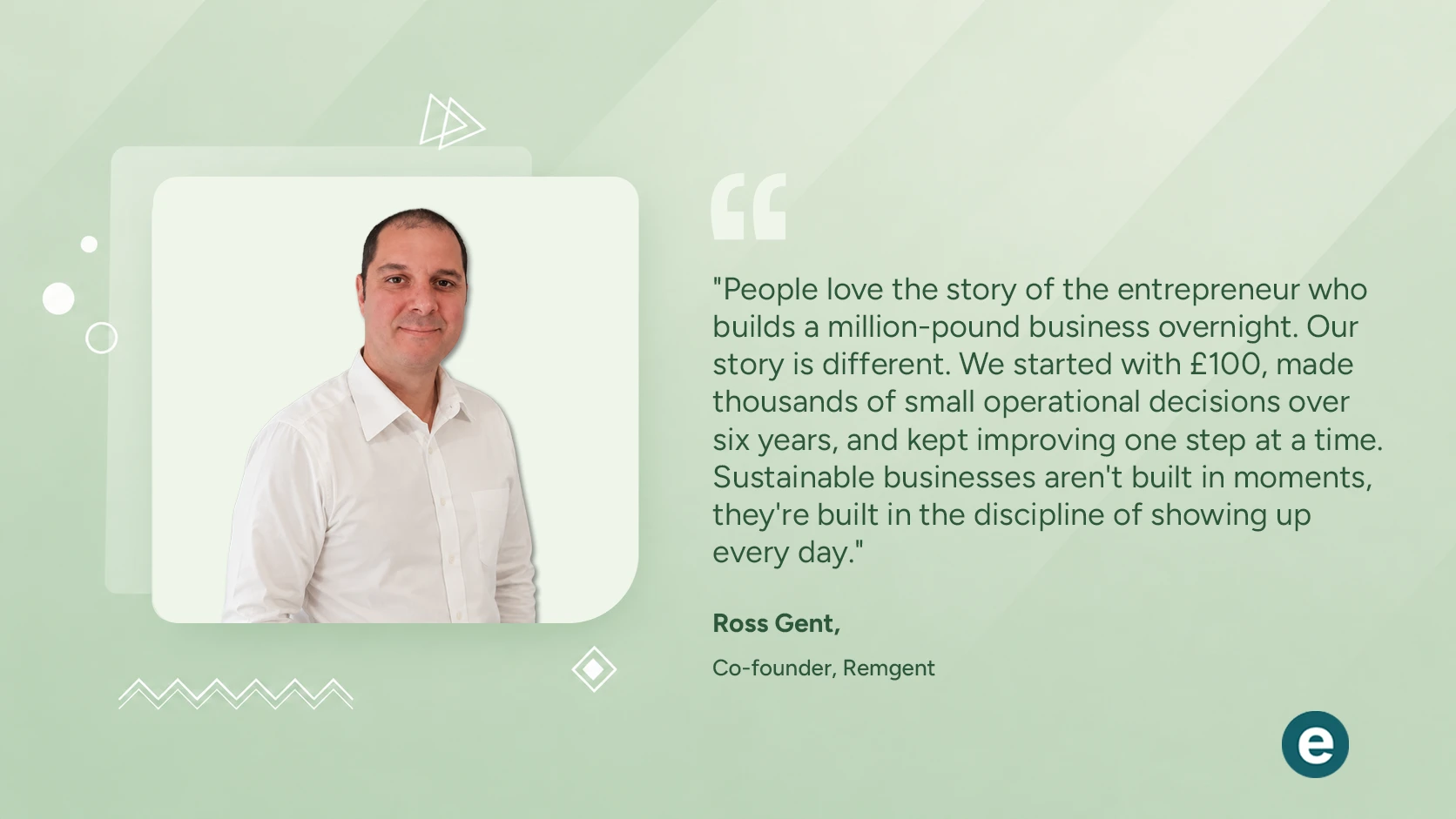
eCommerce success stories circulate in a particular format: the founder identifies a product, it goes viral, revenue compounds, and investors appear. Ross’s description of that narrative is precise: the internet paints a picture of eCommerce millionaires making large amounts of cash overnight. Remgent’s 130,000-pound revenue figure is real. It is also the result of six years of consistent, unglamorous operational work.
The Amazon FBA phase gave Remgent access to buyers without requiring a distribution infrastructure. The move to a direct website gave the brand control over the customer relationship. The pandemic-era closure was a deliberate restructure that produced the warehouse infrastructure the brand needed to control its own fulfillment.
About Ross and Emma Gent
Ross Gent and his wife Emma are the co-founders of Remgent, a UK kitchen and homeware brand, which they launched from a garage in 2018 with a £ 100 investment. The brand carries established names including Stella, Judge, Richardson Sheffield, and Viners, serving both home cooks and professional restaurant buyers. Last year’s revenue was 130,000 pounds.
That number arrived through Amazon FBA, a direct website, a pandemic restructuring that included temporarily closing the business, and the eventual build-out of their own warehouse. Ross is direct about what this trajectory represents and what it does not.
Key Takeaways
- Remgent launched with 100 pounds from a garage in 2018 and reached 130,000 pounds in annual revenue through consistent operational investment rather than viral growth.
- The Amazon FBA to direct website migration gave the brand control over customer relationships that platform dependency prevents.
- A deliberate pandemic-era business closure produced the warehouse infrastructure that enabled professional-grade fulfillment operations.
- Serving both home cooks and restaurant professionals requires product curation standards that earn trust from genuinely discerning buyers.
- Ross’s honest characterization of the eCommerce success myth is itself a form of brand differentiation in a space dominated by aspirational narratives.
You launched Remgent with 100 pounds from a garage. What did those early constraints force you to learn quickly?
Prioritization under genuine scarcity. When you have 100 pounds to start a business, you learn fast what actually matters versus what you think should matter. You cannot afford to test everything. You have to make decisions about where the first pounds go based on what is most likely to produce the first pound of revenue. That discipline never really left us, even as we grew.
You moved from Amazon FBA to your own direct website. What was lost and what was gained?
What was lost was the convenience of Amazon’s existing audience. What was gained was the customer relationship. On Amazon, the customer is Amazon’s customer who happens to be buying from you. On your own site, the customer is your customer. We lost volume in the short term. We gained a relationship infrastructure that has been worth significantly more.
You closed the business during the pandemic to restructure it. How did you get there?
We recognized that we were operating an eCommerce business without proper fulfillment infrastructure. The pandemic created a forced pause that we decided to use deliberately rather than just endure. Closing temporarily to build our own warehouse was a choice to accept short-term revenue loss in exchange for long-term operational control.
You serve both home cooks and professional restaurants. How do you maintain curation standards across a buyer base with very different expertise levels?
The same product standard has to work for both. A professional restaurant buyer knows exactly what quality looks like and will not return if the product does not meet it. We apply the same question to every product we carry: is this genuinely good enough that someone who knows the category would choose it?
What is the most honest thing you can say about the eCommerce success narrative that circulates online?
The internet paints a picture of eCommerce millionaires making large amounts of cash overnight. That picture selects for the exceptional case and presents it as the typical outcome. Remgent’s 130,000 pounds represents six years of consistent, unglamorous operational work. I am genuinely proud of that number. But I think it is important to describe it accurately.
Lessons for Founders
- Early resource constraints teach prioritization discipline that persists as an operational advantage even after constraints ease.
- Direct customer relationships are worth more than platform audience access over any meaningful time horizon.
- Deliberate restructure during external disruption is available as a strategy to founders who can identify what the rebuild will produce.
- Honest characterization of growth trajectories is both accurate and differentiating in a space dominated by aspirational narratives.
For more founder stories and growth strategies from operators who have built from the ground up, read more at eFounder.club.